Enneagram: Understanding Motivations and Internal Drivers

An Enneagram test can help us become more curious about some of the motivations and internal drivers that may sit underneath familiar behaviour.

It can offer another perspective on what may feel particularly important to us, what we may be trying to protect, avoid or gain, and why certain responses can become familiar.

Within Discover Insights, Enneagram is one of three complementary perspectives. It is used alongside DiSC and Attachment at Work to build a richer picture rather than using one personality model as the explanation for everything.

That reflects the way we have now defined Enneagram internally: a lens for motivations and what somebody may be seeking, avoiding or protecting, while avoiding treating a type as the answer to complex behaviour.

Enneagram test - Who am I post-it note

What does the Enneagram explore?

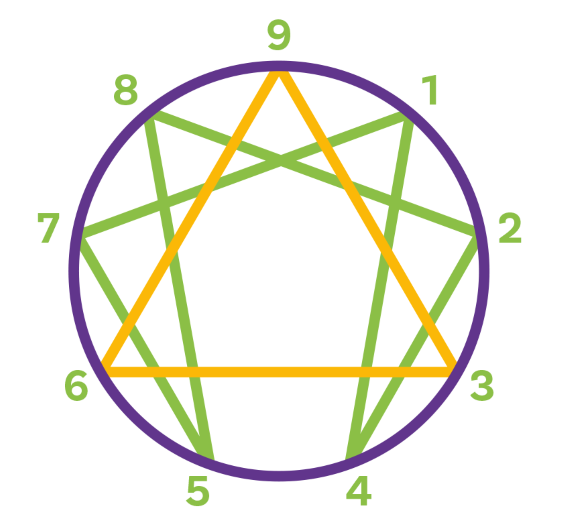
The Enneagram describes nine broad personality patterns, each associated with different motivations, concerns and familiar ways of responding.


Its value is not in putting somebody into a fixed box. It gives us another way of becoming curious about what may sit underneath behaviour and why the same situation can matter differently to different people.


It can help us explore:

The nine Enneagram personality types

Most people will recognise something in more than one description. The purpose is not to reduce somebody to a type, but to use the model as one way of exploring recurring motivations and responses.

Enneagram Type 1

They see anger as a character flaw and work hard both to repress it and their instincts to behave in a socially accepted way. Their instinct is highly influenced by and dependent on feelings.

Enneagram Type 2

They are interested in people and play the role of nurturer and are keen to present an image of someone who is both loving and caring. Will express their positive feelings but supress negative ones.

Enneagram Type 3

They will work to be seen in a good light and are concerned with behaving in line with the socially agreed norms. Will supress feelings in order to function more effectively and make a favourable impression on others. 

Enneagram Type 4

They have a strong need to express themselves and be seen as unique and special. To express your feelings fours will look for creative or artistic ways to enable o do this. Their feelings will be influenced and dependent on what you think of them.

Enneagram Type 5

They will tend to rely on their own resources and find their safety in knowledge and/or withdrawing. Will substitute thinking for doing and can be endlessly preoccupied with ever more complex, yet isolated thoughts.

Enneagram Type 6

They try to control their fear through vigilance, approval of authority figures, or through rebelling against authority. Are most out of touch with their thoughts and so look for reassurance about what they think, or can get stuck in circular thinking patterns.

Enneagram Type 7

They are active and optimistic. They avoid unpleasant emotions, including fear or can actively pursue ways to challenge that fear. Tending to leave their train of thought incomplete, not finishing one thought before another grabs their attention.

Enneagram Type 8

They are powerful and not afraid to express their anger. They have overdeveloped instinctive responses to the world and move on ‘gut’ hunches. They don’t pause sufficiently to foresee the consequences of their actions.

Enneagram Type 9

They are accommodating of other people and are often out of touch with their own anger and instincts. They disengage from their instinctive drives and reactions to the world to maintain an inner stability and peace.

When can Enneagram be useful?

Enneagram can be useful when you want to look beyond what you are doing and become more curious about what may be driving a familiar response. Some of the areas it can help you explore include:

Within Discover Insights, Enneagram adds another layer to the behavioural information from DiSC rather than being treated as a complete explanation in its own right.

How Enneagram fits within Discover Insights

Enneagram can add useful depth, but it is only one part of the picture.

Visible behaviour can have several possible explanations. Two people may behave in a similar way for very different reasons, and the same person may respond differently depending on the situation, relationship or level of pressure.

That is why Discover Insights brings Enneagram together with DiSC and Attachment at Work.

DiSC helps us explore observable behaviour and communication preferences.

Enneagram adds insight into some of the motivations and drivers that may sit underneath familiar behaviour.

Attachment at Work can help us explore patterns around trust, reassurance, independence and connection in working relationships.

When you complete Discover Insights, you complete all three assessments. I review the information before we meet, then we have a guided interpretation conversation where we explore what stands out and how the different perspectives may connect with your own experience.

The aim is practical self-understanding and curiosity, not to give you three personality labels.

What’s included

Three assessments and reports, preparation and a 45 to 60-minute guided interpretation conversation.

£349 + VAT

Testimonial

If you’re intrigued about personality, and understanding yourself better, then you will love getting to know your Enneagram profile!

I’ve worked with Jo for several years now and just love her down-to-earth, friendly and knowledgeable approach. Importantly, when exploring personality, there is no judgement when working with Jo.

I’d previously worked with Jo to understand my DiSC profile and can often be heard describing how, “for the first time ever, I felt I’d been given permission to be fully me”.

It truly was so revealing and insightful for me, that it was a natural next step to delve even deeper and understand myself even more through my Enneagram profile.

Where DiSC gave me permission to be fully me, Enneagram helped me to know what it means to be fully me.

Enneagram goes beyond just telling you your ‘personality type’. It helps you to understand how different situations will prompt different responses and reactions in you. This in turn helps you to be aware of these factors affecting your behaviour and adjust accordingly. I’ve learned that self-awareness is a key aspect to self-development, and Enneagram is invaluable in creating that awareness.

If you’re even a little bit intrigued to develop your own self-awareness, I’d really recommend finding out about your Enneagram profile, and having a chat with Jo about it.

FREE Self Awareness Guide

Do you ever feel unseen, unheard or misunderstood?  Find out why and identify which is the right personality test for you in our free guide.