Discover why your team may hesitate even when they know what to do, and how trust, clarity and past experience shape decision-making.
When I speak to business owners there is one common question that they tell me that their teams use a lot “I just wanted to check…” or “I think I know what we should do. I just wanted to check with you first.”
On the surface, this can be frustrating.
Particularly where the person is experienced, or they understand the client, the work and more importantly they probably know the likely answer.
Yet they still wait.
As the business owner this creates a number of thoughts:
- Why do they need me to confirm this?
- Why will they not trust their judgement?
- Why do they keep bringing decisions back to me?
Perhaps the more useful question is not “Why won’t they decide?” but “What have they learned might happen if they do?”
The decision may not be the real issue
Whilst on the surface the challenge that shows up is around a lack of decision making but what sits underneath this may be something entirely different.
The thoughts that might be running through the employee’s head are:
- Will I be supported if the client reacts badly?
- Will the owner agree with my judgement?
- Will I be criticised for not checking?
- Are the rules the same today as they were last week?
- Am I genuinely responsible for this?
- What if I make the right decision but the outcome is still difficult?
When you take this into account then it is important to consider that perhaps the person may not be simply waiting for an answer.
They may be waiting for:
- permission
- reassurance
- consistency
- information
- protection
- evidence that their judgement is trusted
Waiting can be a form of self-protection
In some perhaps more uncertain environments or cultures then waiting to make a decision can actually feel safer than acting.
Nobody set’s out to create a culture or working environment that fosters uncertainty, but there are some other influences at play.
If someone has previously:
- made a decision that has then been overruled
- been encouraged to use initiative and later criticised
- watched the owner take over whenever something became difficult
- received different responses from different leaders
- seen mistakes treated harshly
- been given responsibility without the necessary authority
then asking first may be an entirely understandable response.
This isn’t necessarily about confidence or weakness; it could also be that the person is adapting to what the environment has taught them.
People don’t only respond to what leaders tell them. They respond to what repeatedly happens when they act.
These individual experiences can gradually create a much wider business pattern. In Why So Much Decision-Making Still Reaches the Business Owner, I explore how unclear authority, mixed signals and pressure cause decisions to move upwards, even when capable people are close to the work.
“Use your judgement” is not always enough
The most common response I see from the business owners to their team not stepping up in the way that they would like, is that they use terms of broad encouragement. Phrases like “Use your judgement” may sound empowering to the owner, but for the team that can often create more uncertainty.
For those employees, it can raise further questions:
- How far does that judgement extend?
- What matters most in this decision?
- What level of risk is acceptable?
- Which clients or situations are treated differently?
- When does the owner expect to be involved?
- Will I still be supported if my decision is not the one they would have made?
I totally agree with empowering people to take more responsibility, where appropriate, but as well as needing space to think, they also need context.
When you give freedom to decide without giving the necessary clarity, for the team that can feel like exposure rather than empowerment.
Notice what happens after someone acts
I would offer you here an invitation to stop and reflect on your own leadership responses to someone making a decision without involving you.
Do you:
- begin by trying to understand their reasoning?
- focus immediately on what you would have done differently?
- quietly correct the outcome?
- take the issue back?
- acknowledge what they handled well?
- make it clear whether the decision was theirs to make?
When as a leader you step straight into offering what you feel is useful guidance on making better decisions, with the intention of offering feedback and encouragement for next time.
The impact and what the employee may hear however could be the message of ‘next time, check with me first’.
Why?
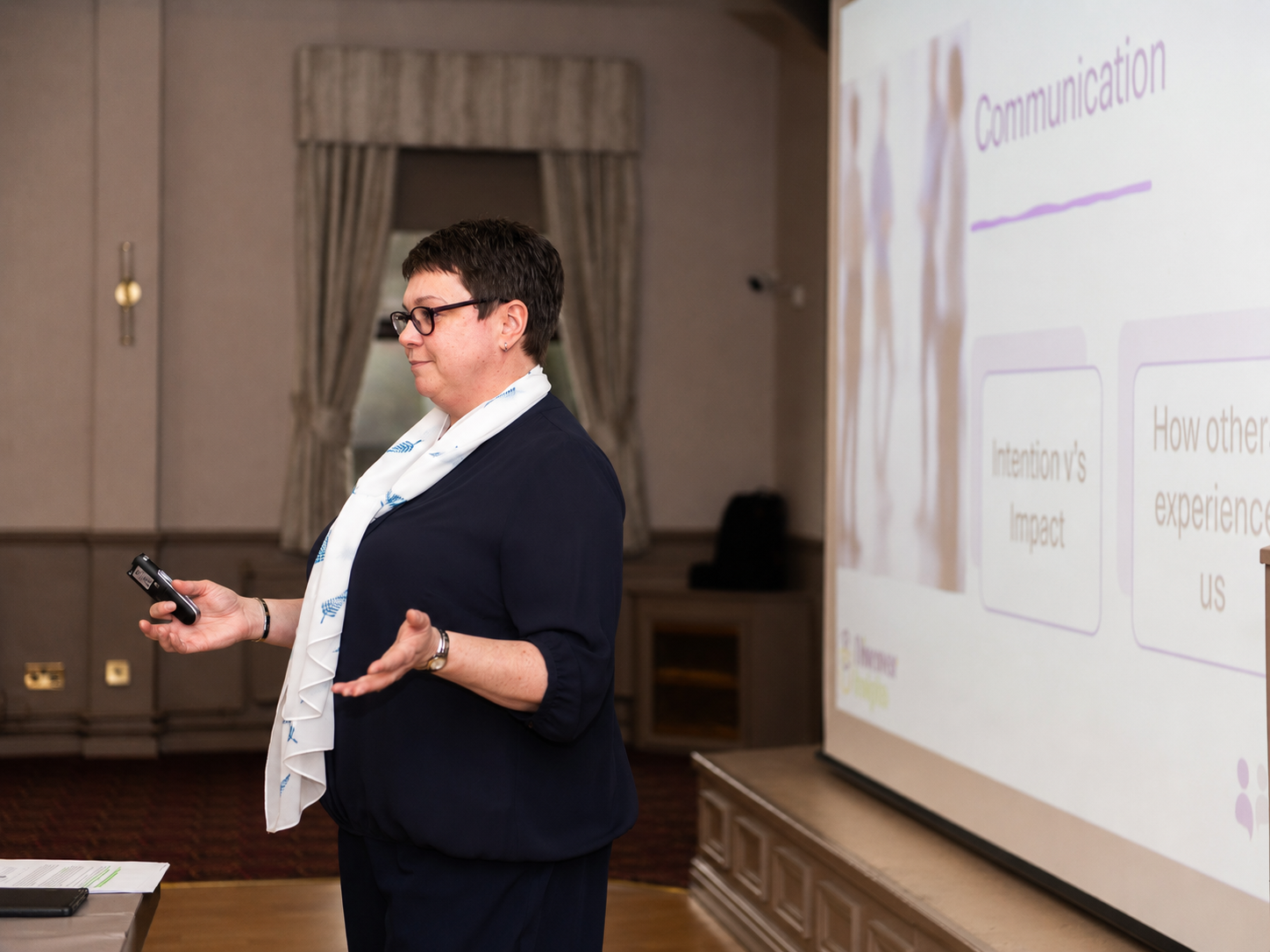
Because the effect is not always determined by the intention but is shaped by how your response is experienced.
Different people may be waiting for different things
Human nature and psychology mean that a one size fits all approach to empowering your team to take more action is not as successful.
There will be different reasons for hesitating for different people.
Some people are waiting for clarity
They need to know:
- what the outcome should be
- where the boundaries sit
- what information matters
- when escalation is expected
Some are waiting for reassurance
They may have reached a sound conclusion but are uncertain whether their judgement will be supported.
Some are waiting for context
They understand their part of the issue but know the owner has a wider view of the client, finances or business.
Some are waiting because waiting has become normal
Questions have always travelled upwards and no one has stopped to ask whether they still need to.
Each one is a different coping strategy that the person has learned to help them feel safe and be successful.
The question behind the question
The simpler way to begin to empower your team to make more decisions is the next time someone in your team comes to you to ask, “What do you want me to do?”, instead of immediately answering their question, try to understand what they are really asking.
To explore this then these are some questions that you can use to help them to be a little more active in the decision-making process.
You could try asking:
- “Talk me through your thinking.”
- “What are you leaning towards?”
- “Which part feels uncertain?”
- “What information would help you decide?”
- “Do you need my approval, or would another perspective be useful?”
- “What are you concerned might happen?”
By using these questions, rather than jumping in with an answer can help you to identify whether the gap is more about:
- knowledge
- context
- confidence
- authority
- psychological safety
- habit
The purpose here though is not to interrogate the employee, that will only cause them to feel overly challenged and to hesitate more in the future.
Instead it is about beginning to understand and respond to the actual need rather than automatically supplying the answer.
What makes it safer to act?
As a leader, there are some things that you can do that will support your team to be more confident when decision-making.
People are more likely to act when they experience:
Clear expectations
They understand the desired outcome and what good judgement looks like.
Consistent boundaries
The level of freedom does not change unpredictably depending on pressure or mood.
Access to information
They are not expected to decide without relevant context.
Proportionate responses to mistakes
A thoughtful decision with an imperfect outcome is treated differently from carelessness.
Visible trust
Leaders allow people to carry decisions through rather than stepping in at the first sign of discomfort.
Useful reflection
When you set up the process of reviewing decisions that the team make, it is important that those decisions are reviewed with the intention to develop judgement, not to prove who was right.
This is how culture quietly shapes ownership.
A reflection for leaders
Here are some things that it will be helpful to consider relating to your business
- What kinds of decisions does my team hesitate over?
- Are our boundaries genuinely clear, or do I simply assume they are?
- Do my responses build judgement or increase caution?
- What might they believe could happen if they act without me?
- Is the person waiting because they lack capability, or because the environment has taught them to wait?
Closing thought
When capable people keep waiting, the answer is not always to tell them to be more confident. Sometimes it is to create greater clarity about what they can decide and greater consistency in how their decisions will be received.
Over the next week, notice the decisions people bring to you. Before answering, pause long enough to understand whether they need permission, perspective, reassurance or information. The distinction may tell you something important about how decision-making is currently experienced in your business.
Next month, I will look more practically at how to decide which decisions your team can make independently, which need discussion and which genuinely need to reach you.