Why do the same challenges keep repeating at work? Discover how self-awareness and understanding behaviour patterns can help you break cycles and lead with more clarity and intention.
Many professionals notice the same challenges repeating at work, whether it’s recurring team issues, decisions that come back around, or situations that feel familiar. Often, these patterns aren’t just about the problem itself, but the behaviours and responses that naturally shape how we work.
Many professionals recognise this, although they don’t always say it out loud. But it looks like this:
You handle something.
You move forward.
You feel like you’ve addressed it.
And then, a few weeks or months later, something similar appears again.
A conversation you’ve had before.
A situation you thought was resolved.
A dynamic that feels… familiar.
It’s easy to assume the issue sits in the situation itself. But often, what repeats isn’t just what’s happening around you.
It’s what feels natural within you.
When patterns feel like personality
One of the reasons these cycles are hard to shift is because they don’t feel like patterns. They feel like who you are and just part of how you approach things.
You might recognise yourself and make justifications in subtle ways:
You step in because you’re someone who cares about standards
You take responsibility because you’re reliable
You smooth things over because you value harmony
These aren’t flaws, they’re strengths, but when a strength becomes the only way you respond, it can quietly shape your experience over time.
Looking beneath behaviour
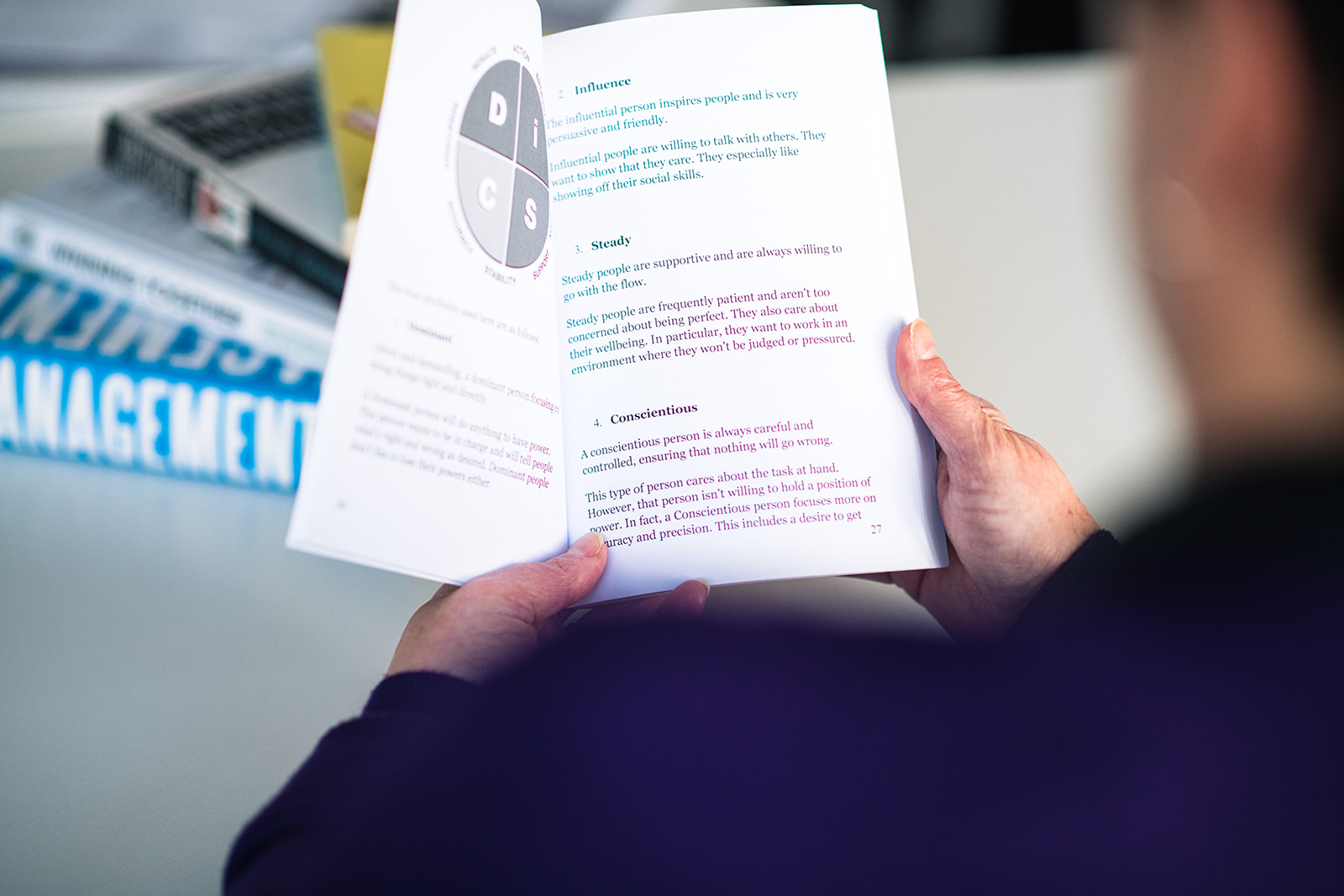
Tools like DiSC often help us understand how we behave, whether we’re more direct, steady, detailed, or people-focused .
But underneath behaviour, there’s usually something deeper driving it.
This is where frameworks like the Enneagram become useful, not to label you, but to help you notice the motivation behind the pattern .
For example:
You might step in quickly not just because it’s efficient, but because things feel uncomfortable when they’re uncertain.
You might hold onto decisions not just because you care, but also because letting go doesn’t feel entirely safe.
These responses aren’t random, they’re often shaped over time as ways of staying steady, capable, or in control, they are coping strategies that you learned somewhere before that helped you to feel safe and survive.
The role of self-protection
Many of the patterns that repeat at work are, at their core, forms of self-protection. Not in a dramatic sense, but in a quiet, everyday way.
You might notice:
Wanting to avoid mistakes
Wanting to feel competent
Wanting to be seen as reliable
Over time, these intentions can become internal rules, and those rules begin to guide how you respond, importantly this often happens without you realising.
Why awareness changes the experience
The goal here isn’t to stop doing the things that come naturally to you, it’s to start recognising when they are happening automatically.
Why?
Because once you can see the pattern, something shifts.
You might still choose to step in, but the important thing is that now, it’s a choice and not just a reflex.
It is that small difference where change often begins.
A different kind of question
Instead of asking: “Why does this keep happening?”
You might begin instead to ask: “What feels important to me in this moment and where might that be shaping how I respond?”
Not to criticise yourself, because I know that some people are really good at doing that, but to understand yourself more clearly.
It is important, because the patterns that repeat in your work are rarely just about your work, they’re often a reflection of something more consistent within you.
If this feels familiar, you might find it helpful to explore what sits underneath your natural responses, awareness is often the first step towards having more choice in how you lead and work.