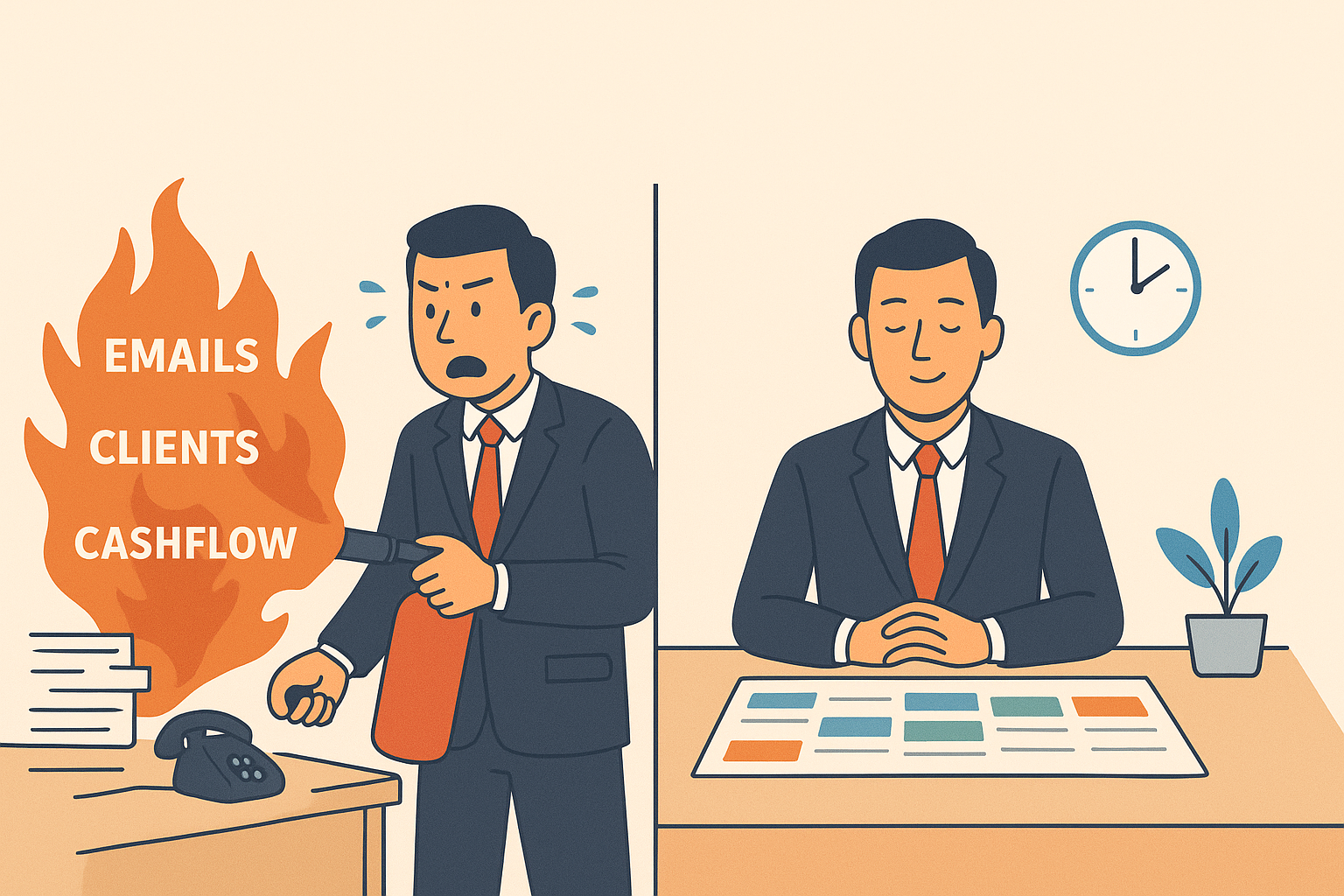
If you sometimes feel like your business is running you rather than the other way around, you’re not alone. Many people find themselves caught in a constant cycle of firefighting: responding to urgent emails, smoothing over client/work issues, or jumping in to cover gaps. It’s exhausting and, after a while, it can start to feel like this is just “how business/life is.”
But here’s the truth: you didn’t build your business to spend your days putting out fires. And while reacting to problems is part of the journey, it shouldn’t define it.
The Hidden Cost of Firefighting
When firefighting becomes the norm, it doesn’t just hold back your business, or career it takes a toll on you personally:
- Mental health: Being stuck in constant reactivity fuels stress and anxiety, leaving little space for clear thinking or long-term vision.
- Physical health: Long days and disturbed sleep erode energy, which in turn reduces your capacity to cope.
- Relationships: Friends, family, and personal passions often come second when you’re “always on.”
This way of working robs you of perspective. Instead of leading your business with intent, you end up chasing it from behind.
Why Focus Is the Antidote
Let’s start with my definition of Focus: gaining clarity on what matters most, so time and energy aren’t wasted.
Focus doesn’t look the same for everyone. For example:
- If you lean towards DISC “D” (Dominance) or the Enneagram Type 3 (Achiever), your drive for results may keep you charging ahead—yet without focus, that energy gets scattered.
- If you’re more of a DISC “S” (Steadiness) or an Enneagram Type 9 (Peacemaker), you might avoid difficult decisions, which can allow problems to quietly pile up until they become fires.
Recognising your natural patterns is the first step. Focus is about choosing deliberately where you put your attention, instead of letting old habits or personality preferences run the show.
The Role of Mindset
Another factor is mindset. When challenges arise, it’s easy to slip into “I must handle this myself.” That belief, while admirable, keeps you trapped. Shifting your mindset from control to trust—in your systems, your people, and your ability to pause before reacting—creates breathing space. It’s not about being positive for the sake of it; it’s about cultivating a practical confidence that things can be managed differently.
5 Practical Ways to Break Free
Here are five ways to move from firefighting into proactive leadership:
- Clarify Your Priorities
Try the Eisenhower Matrix (urgent vs. important) to separate what deserves your attention from what can wait. If you’re naturally driven to respond instantly, this tool helps you slow down and ask, “Is this really where my energy and time should be spent?” - Time-Block Your Week
Protect your best hours. Whether you’re a morning thinker or an afternoon planner, use simple calendar blocks in Google Calendar or Outlook to reserve time for strategy, client delivery, and recovery. - Delegate and Empower Others
If you tend to hold on to tasks (often a trait of Enneagram Types 1 and 6, or those high in “C” for Compliance on DISC), notice where you can trust others instead. Tools like Asana or ClickUp give visibility, so you don’t feel like you’re letting go blindly. - Systemise the Repeatable
Anything you do more than twice deserves a process. From email templates to step-by-step checklists, systems reduce the number of things that can become fires in the first place. - Build in Reflection
A weekly review helps you step out of the weeds. Methods like Getting Things Done (GTD) encourage you to capture, organise, and review tasks so your brain isn’t overloaded with unfinished business.
The Bottom Line
Feeling like your business is running you is far more common than you might think — this is equally relevant to your career and even your life — but it doesn’t have to stay that way. By understanding your natural tendencies, shifting your mindset, and building in focus, you can reclaim your time, protect your wellbeing, and rediscover the business you set out to create.
💬 Your Turn: Do you recognise yourself in the firefighting cycle? Which of these strategies would make the biggest difference for you? Share your thoughts in the comments, I’d love to hear how you’re tackling this challenge.