Successfully navigating relationships—whether in personal life, the workplace, or social circles—are built on effective communication, understanding, and adaptability. However, because people have different personalities and communication styles, misunderstandings and conflicts often arise. One of the most effective ways to improve interactions is through the DiSC personality profiling system. By understanding how different personality types approach relationships, you can navigate relationship dynamics more effectively, enhance communication with personality types, and focus on strengthening bonds in meaningful ways.
Understanding Relationship Dynamics Through DiSC Profiling
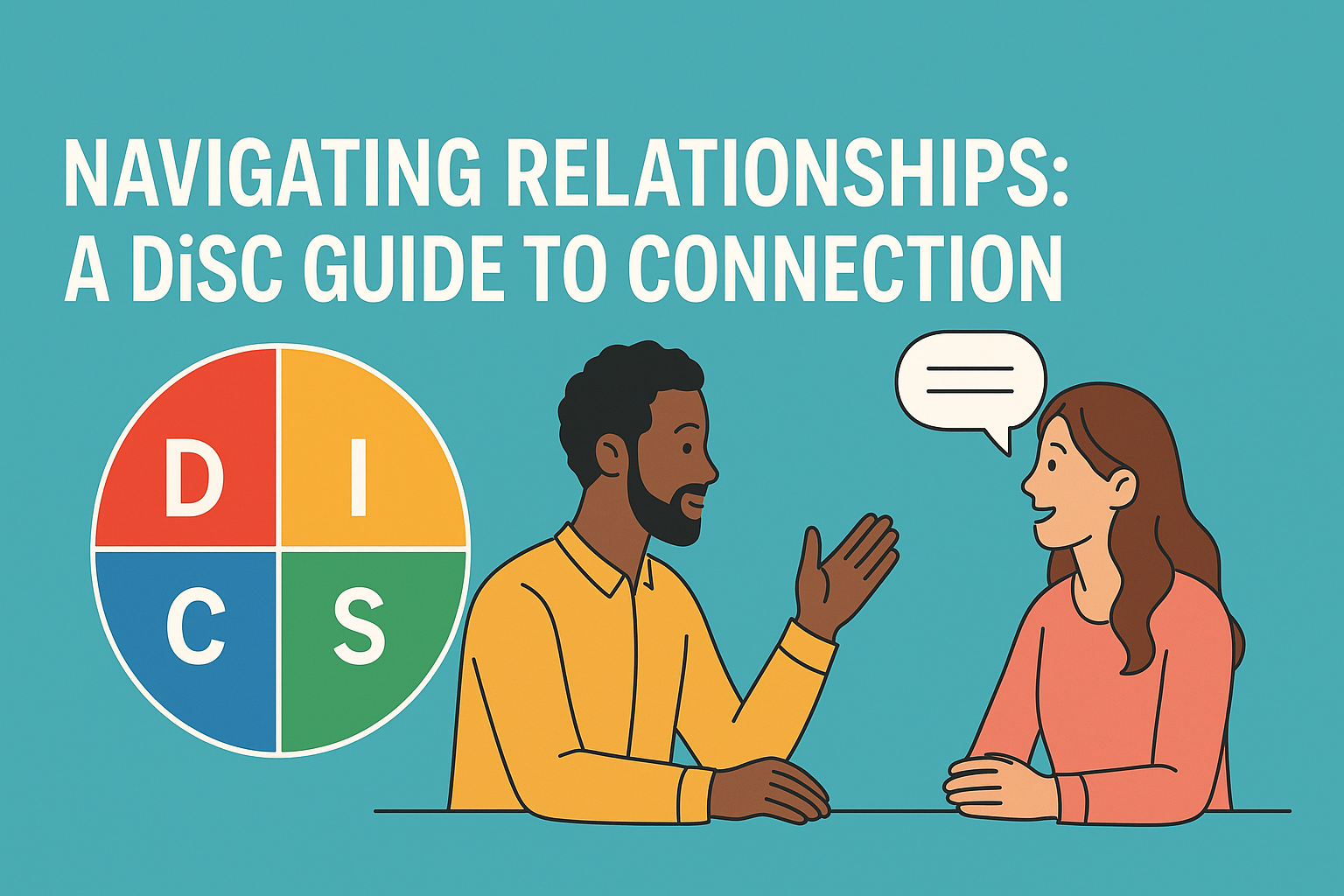
The DiSC model, developed by psychologist William Moulton Marston, categorises human behaviour into four primary personality traits:
- Dominance (D) – Bold, assertive, and results-driven.
- Influence (I) – Charismatic, persuasive, and people-focused.
- Steadiness (S) – Loyal, calm, and relationship-oriented.
- Conscientiousness (C) – Detail-oriented, analytical, and precise.
Each of these personalities brings different strengths and challenges to navigating relationships and relationship dynamics which I have explored before in this article. Recognising and appreciating these differences is the first step in improving how we relate to others.
How DiSC Styles Affects Navigating Relationships
- D-Types (Dominant): These individuals prioritise efficiency, control, and results. In relationships, they can sometimes come across as impatient, competitive or overly focused on goals rather than emotions.
- I-Types (Influential): They thrive on social connections and love engaging with people. Their enthusiasm can be infectious, but they may struggle with follow-through or become easily distracted.
- S-Types (Steady): They value loyalty and harmony. They are great listeners but may avoid confrontation, making it difficult for them to address issues directly.
- C-Types (Conscientious): These individuals focus on logic and accuracy. They can be incredibly reliable but may come across as critical or emotionally distant.
Understanding these styles allows you to tailor your communication approach, making interactions more productive and meaningful and it makes navigating relationships smoother.
Improving Communication with Personality Types
One of the main challenges in navigating relationships, that can lead to break down is poor communication. Each DiSC type processes information differently, so using a one-size-fits-all communication style can lead to misunderstandings.
Here’s how to enhance communication with personality types effectively:
Communicating with a D-Type (Dominance)
Do: Be direct, confident, and to the point.
Do: Focus on solutions rather than emotions.
Do: Give them control over decisions when possible.
Do: Avoid excessive small talk or emotional appeals.
For example, in a workplace setting, if you need to discuss a project with a D-type manager, say:
“I have a proposal that will increase efficiency by 20%. Would you like a quick summary before we proceed?”
This approach works better than:
“I was thinking about a few ideas that might be interesting. Can we discuss them?”
Communicating with an I-Type (Influence)
Do: Be enthusiastic and engaging.
Do: Use positive reinforcement and humour.
Do: Allow them to express their ideas and thoughts.
Do: Avoid being overly serious or critical.
For instance, if you’re discussing plans with an I-type friend, you might say:
“I love your energy! Let’s brainstorm together and make this idea even better!”
Communicating with an S-Type (Steadiness)
Do: Be patient, calm, and reassuring.
Do: Show appreciation for their support and loyalty.
Do: Encourage them to express their thoughts.
Do: Avoid rushing them into decisions.
If you’re giving feedback to an S-type coworker, say:
“I really appreciate your effort on this project. Would you be comfortable if we tried a slightly different approach?”
Communicating with a C-Type (Conscientiousness)
Do: Be precise, logical, and detail-oriented.
Do: Provide data and facts rather than emotions.
Do: Respect their need for structure and accuracy.
Do: Avoid being vague or overly casual.
For example, instead of saying:
“We should make this document more appealing.”
Try:
“Let’s adjust the formatting to ensure better readability and consistency.”
By adapting your approach to each DiSC type, you minimise friction and create more effective, engaging interactions which makes navigating relationships smoother.
Strengthening Bonds in Personal and Professional Relationships
Building strong relationships takes time and effort, but applying DiSC principles can make the process of navigating relationships smoother. Here are some practical ways to use DiSC to help in navigating relationsips and foster better connections:
1. Recognise and Respect Different DiSC Styles
Each personality type has unique strengths. Instead of expecting others to communicate as you do, take the time to understand their preferences.
For example, in a romantic relationship, if one partner is a D-type (direct and goal-oriented) and the other is an S-type (gentle and patient), misunderstandings can arise. The D-type might feel their partner is indecisive, while the S-type may perceive the D-type as pushy. Acknowledging these differences allows both to find a middle ground when navigating relationships.
2. Adapt Your Approach for Better Collaboration
In professional settings, DiSC helps teams work more efficiently by balancing different work styles.
- A C-type employee who values accuracy may struggle to work with an I-type leader who prioritises creativity over details.
- A D-type manager might expect quick decisions, whereas an S-type employee needs time to process changes.
By recognising these differences, teams can create an environment where every personality type thrives.
3. Use DiSC for Conflict Resolution
Conflicts often arise when different personalities clash. If a high-energy I-type feels ignored by a serious C-type, tension can build. Instead of forcing one communication style over another when navigating relationships, finding a balanced approach can prevent misunderstandings.
For instance, if a D-type and C-type have a disagreement, the D-type may prefer quick resolution, while the C-type wants to analyse every detail. The best approach is a compromise:
- Give the C-type time to prepare their points.
- Encourage the D-type to listen without rushing the process.
4. Strengthen Emotional Connections in Personal Life
In navigating relationships such as friendships, marriages, and family relationships, understanding DiSC leads to deeper emotional connections.
- If your friend is a high-I personality, make time for social activities and fun discussions.
- If your partner is an S-type, reassure them of your support and avoid unnecessary conflicts.
- If a family member is a C-type, respect their need for order and thoughtful decision-making.
By recognising what makes each person feel valued, you build long-lasting relationships.
Mastering Relationships with DiSC
Understanding DiSC and relationships gives you the tools to improve communication with personality types, find navigating relationship dynamics easier, and gives focus on strengthening bonds. Whether at work, in friendships, or in romantic relationships, adapting to different DiSC styles fosters more meaningful and productive connections.
By applying DiSC insights, you can reduce misunderstandings, improve teamwork and collaboration and build deeper, more fulfilling relationships.
For support to help you with navigating relationships book an exploratory conversation and let’s talk about how DiSC insights could help you.